




Want to create a vegetable garden at home? The horticulturist from the Food Garden presents two inspiring vegetable garden plans where vegetables, herbs, and edible flowers grow side by side. The presence of flowers helps attract pollinating insects.
Horticulturist's tips
-
Install an insect net over radishes, cabbages, garlic, onions and leeks crops, as well as cucumbers and zucchinis (until flowering) to protect them from pests.
-
To prevent leaving the soil bare during the cold season and to enrich it, sow a green manure crop (oats or an oats and field peas mix) on the beds at the end of summer.
Flowering vegetable garden plan
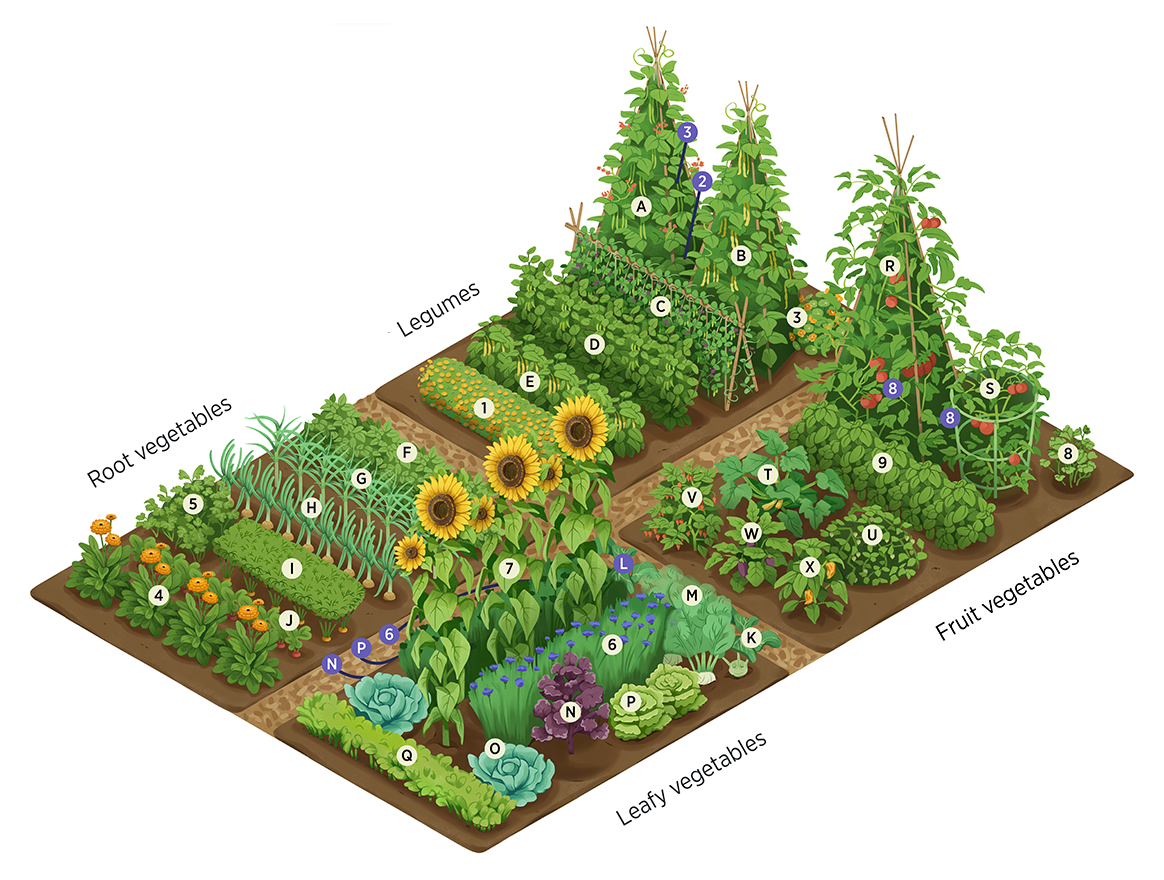
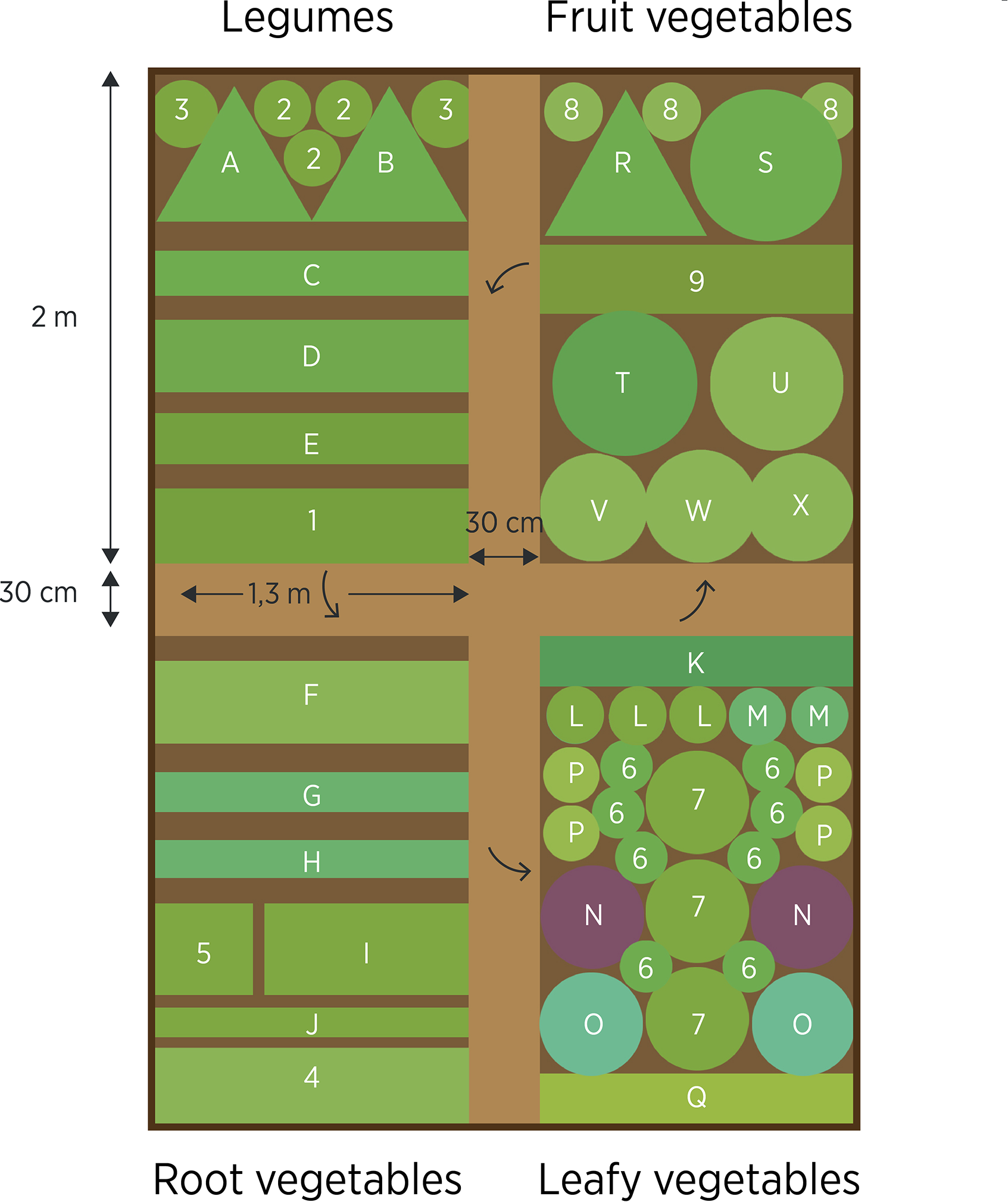
In this garden, vegetable plants are arranged in four cultivated plots (beds) according to their category: legumes, root vegetables, leaf vegetables, and fruit vegetables. Pathways covered with organic mulch separate the beds, making maintenance and harvesting easier.
Arrows indicate the crop rotation direction. In general, fruit vegetables are the most nutrient-demanding, followed closely by nitrogen-hungry leaf vegetables. Next come root vegetables, followed by legumes, which thrive in poorer soil. The proposed rotation helps optimize the use of compost and fertilizers.
For clarity, the plants are illustrated at maturity. However, not all vegetables are ready to harvest at the same time.
|
|
Legend
|
Square-foot garden plan
The square-foot garden, which can be raised or not, maximizes growing space by eliminating rows. The beds are divided into squares, usually 30 cm x 30 cm, though in this plan, they are slightly larger (40 cm x 40 cm).
In the proposed plan, one bed is dedicated to perennial herbs and is not included in the crop rotation (identified by arrows). In the three remaining beds, vegetable plants are grouped according to their nutrient requirements: heavy feeders, moderate feeders, and light feeders.
Rotation direction Details of each bed
|
Legend
|


Illustrations: Espace pour la vie/Audrey Desaulniers